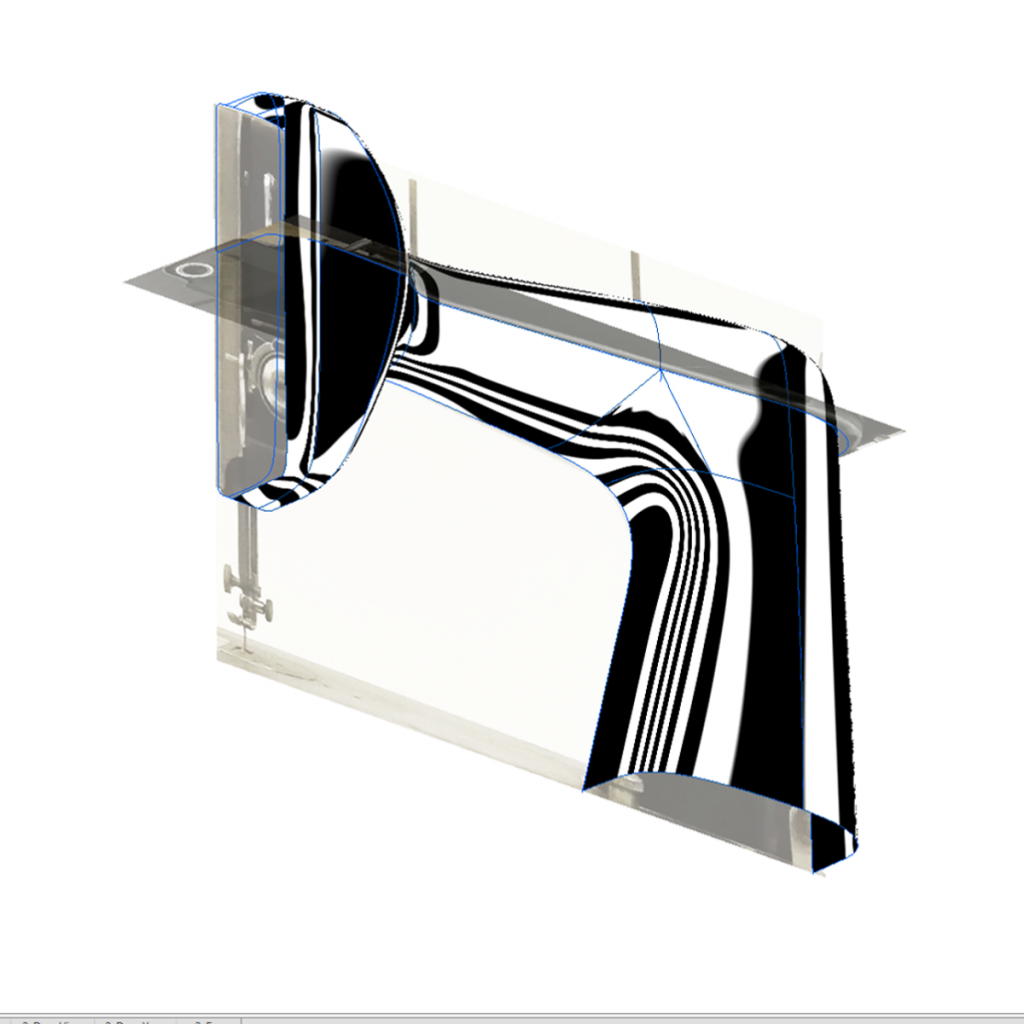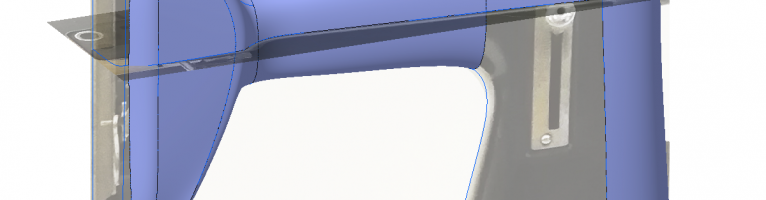
Problem: It is impossible to create a 5-sided surface that is at least tangentially connected.
Solution: By converting the bounding surfaces, the original 5-sided surface is divided into 4-sided surfaces.
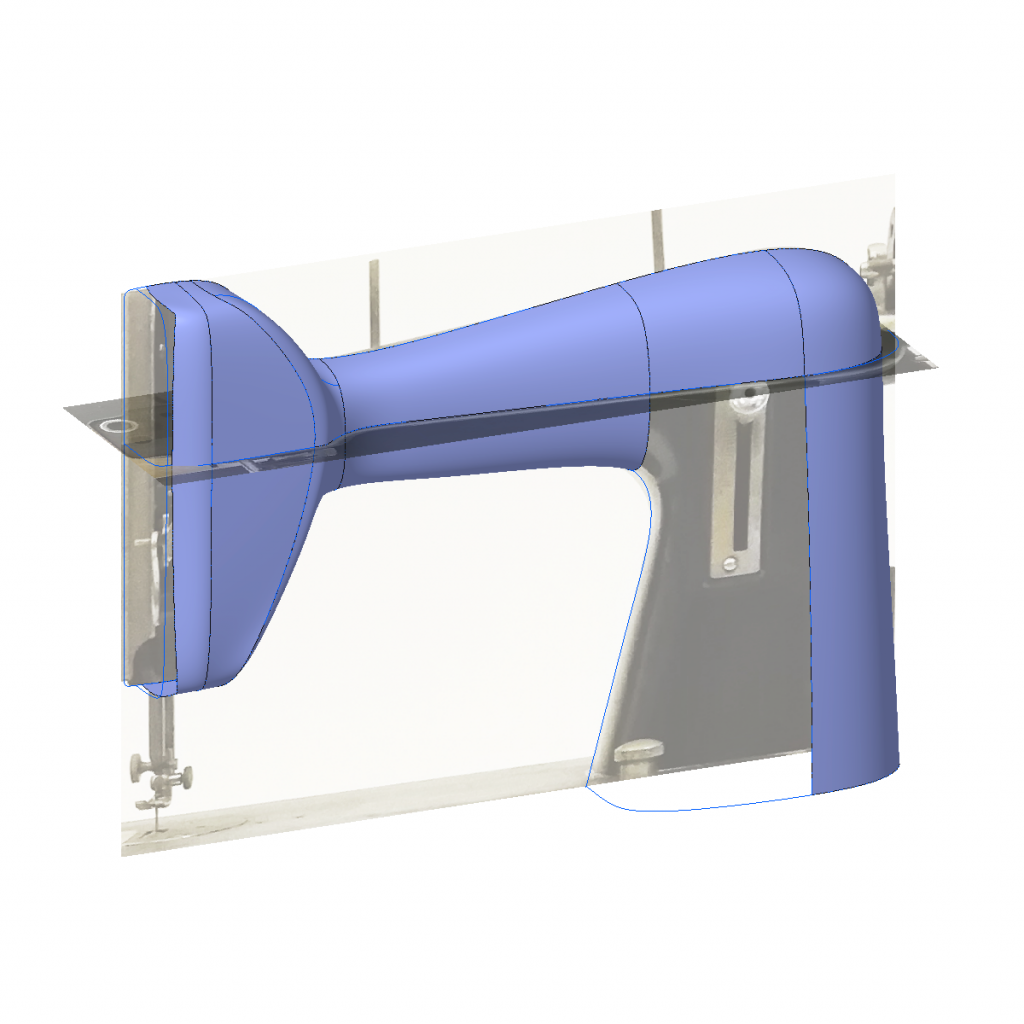
Theoretical background: Most CAD systems are based on NURBS (Non-Uniform B-Spline Surface). Connection of the NURBS surfaces can be well controlled in the case of 4 bounding curves, otherwise, some “trick” must be applied. The first step is to cut the original 5-sided surface into two 4-sided patches.
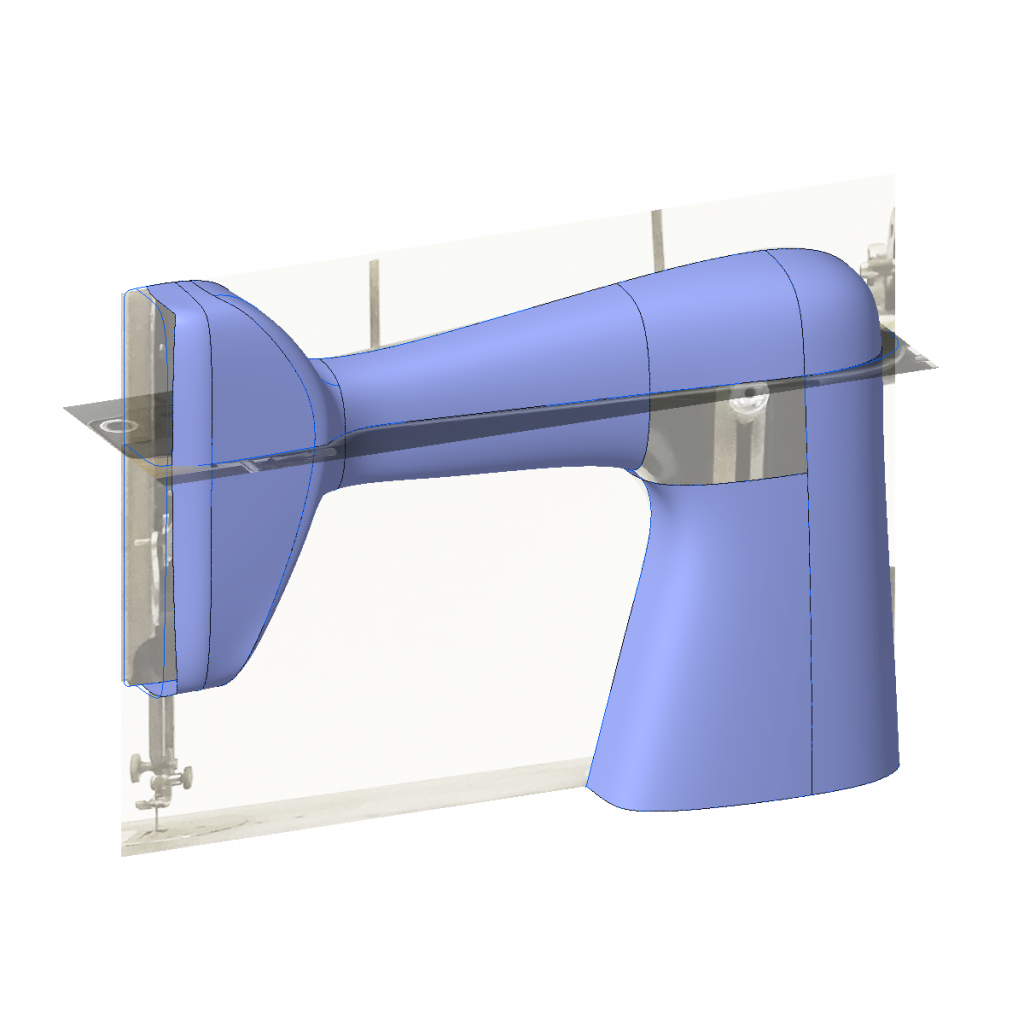
In this case, one of the surfaces is nicely connected to its surroundings. However, the remaining 4-sided gap is still a problem because its two adjacent edges run perpendicular to the symmetry plane, so they practically do not form corners. (Geometrically, their tangents point in the same direction, which is topologically identical to the tangential connection, which does not count as a corner).
To eliminate the problem, further divide the residue into a 4- and a 3-sided surface.
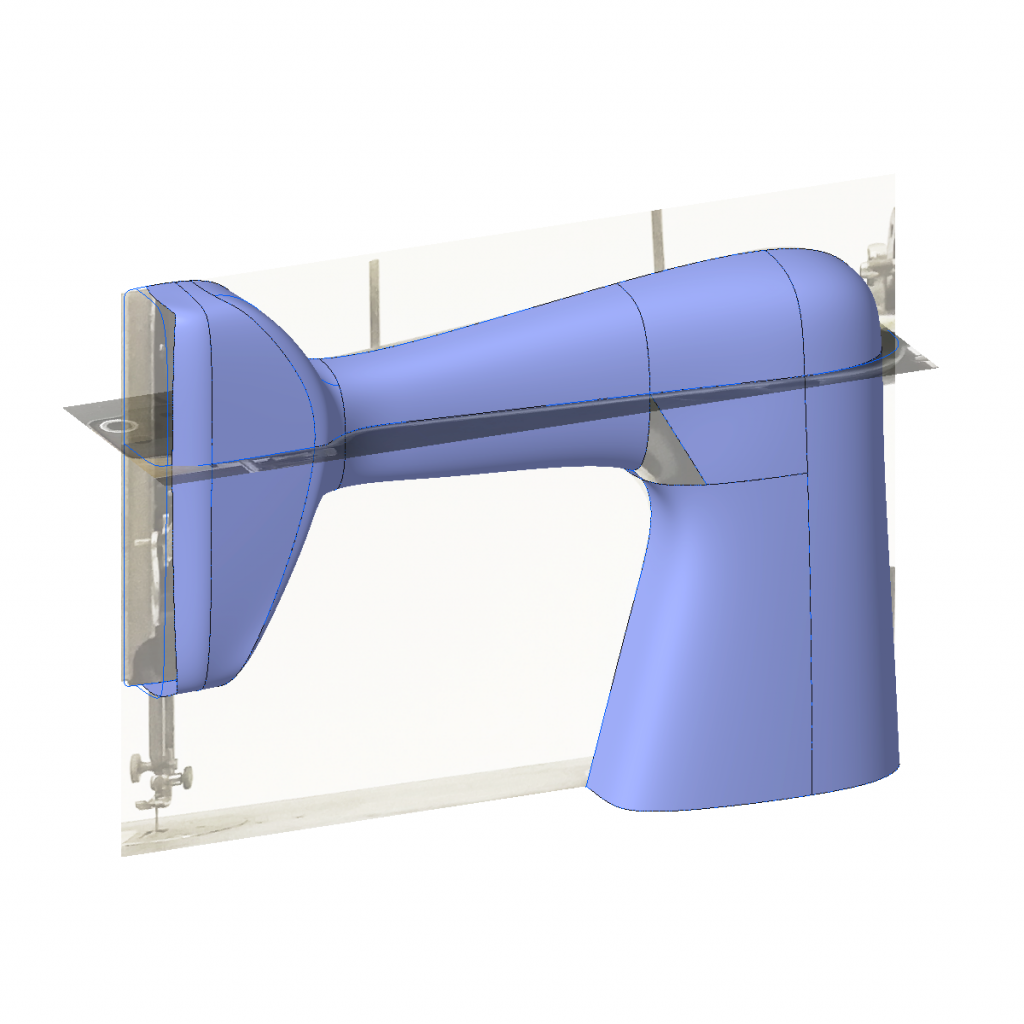
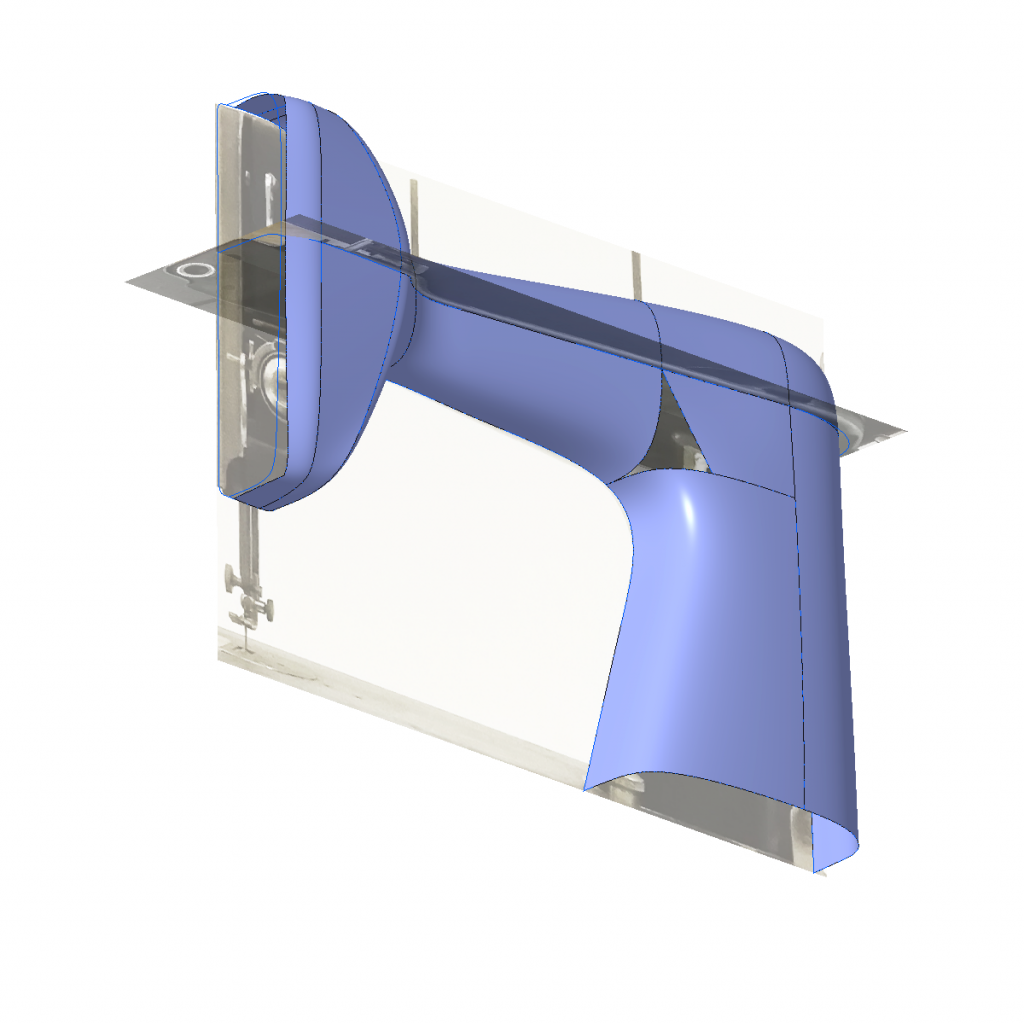
The problematic 3-sided surface gap is converted into a 4-sided one by cutting out the bounding surface.
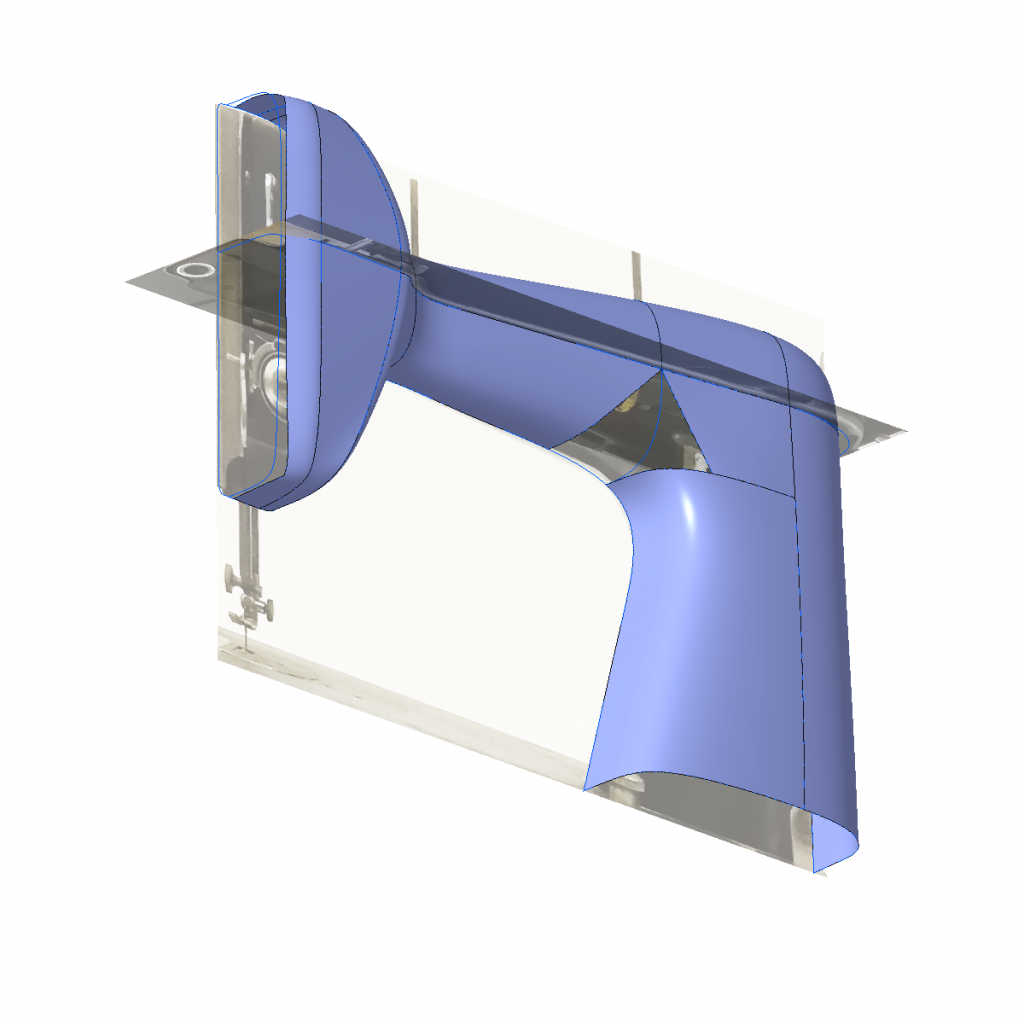
This 4-sided gap is now easy to cover with a 4-sided NURBS surface.
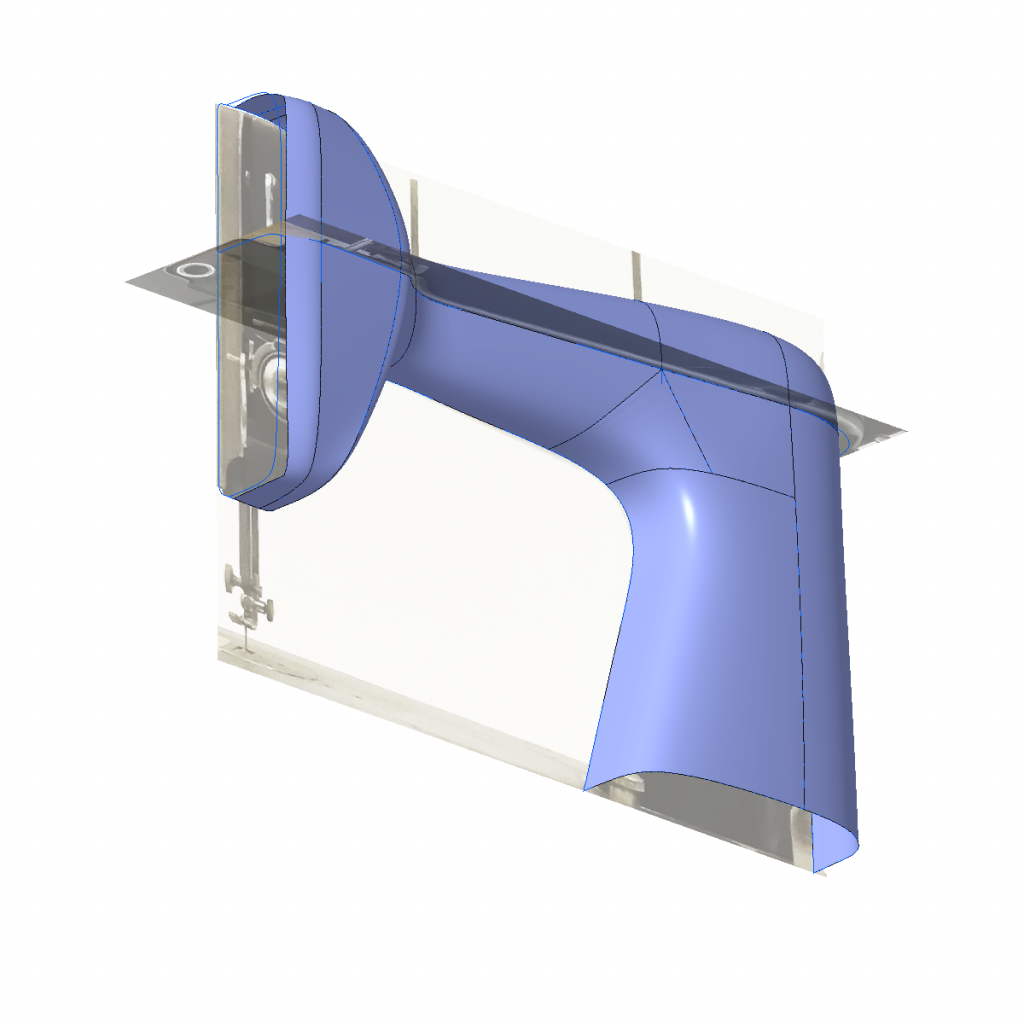
Surfaces made in this way connect well (at least tangentially) to their original environment everywhere.